How to Teach Middle School Math Without Algebra
Your middle schooler doesn't hate math.

They hate feeling lost in it.

You're allowed to slow down. They don't need algebra yet. They need to actually understand the math they're doing right now.

Over 700 homeschool moms and counting.

image.png

Here's exactly what's inside. A mindset shift, so you stop panicking about where your middle schooler is right now. A simple answer for what to do today, every single day. And one big project that ties the whole year together.

Three parts. You'll always know which one you're in.

  • Number sense.

  • Fractions that actually mean something.

  • Percentages that connect to real life.

  • Mental math that happens naturally, not painfully.

Without those foundations, Algebra is like trying to build a second floor on a cracked foundation.

And eventually, something gives.

The issue isn't that your child needs to work harder. The issue is that the plan skipped something important. And you can fix that.


💗 Over 700 homeschool moms have used this plan!


I want you to hear this clearly:

  • You are not the problem.

Your current plan is the problem

And you can change the plan AT ANY TIME.

This is not a course. Not a curriculum. Not a workbook.

It's a plan for you — the teacher.

A clear, month-by-month roadmap that tells you exactly what to focus on, how to structure your days, and how to build the foundations your middle schooler actually needs before Algebra ever enters the picture.

You open it. You know what to do.

You lead math with confidence.

What's Inside

A complete 10-month middle school math roadmap — so you always know what to focus on

Clear monthly focus — no more wondering if you're covering the right things

✓ A flexible weekly rhythm — so you know how to fit math into your real life without it taking over

✓ Strength-building work in fractions, decimals, percentages, ratios, and mental math

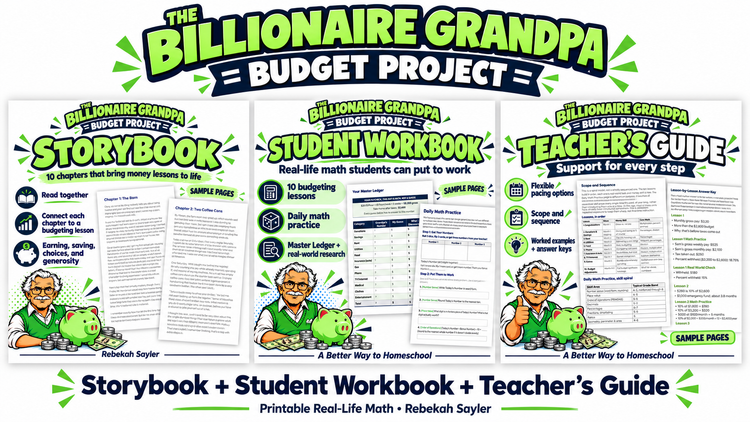
The full Billionaire Grandpa Budget Project (more on this in a moment)

✓ A calm, flexible structure that fits your family — not a school schedule

✓ A checklist for strengthening math facts without drilling

What To Do Today

Some days you don't need mindset work. You need to know what to do right now.

That's in here.

Multiplication Mania tackles the handful of multiplication facts that never seem to stick, the ones with no rhyme or reason to them, until suddenly they do.

Need something different for math today? There's a quick-pick tool inside for exactly that moment. You want a hands-on idea, something that isn't a worksheet, and you don't want to spend twenty minutes searching for it. Open it, pick one, go.

No mindset required for this part. Just open it and use it.

image.png

The Year You're Actually Building Toward

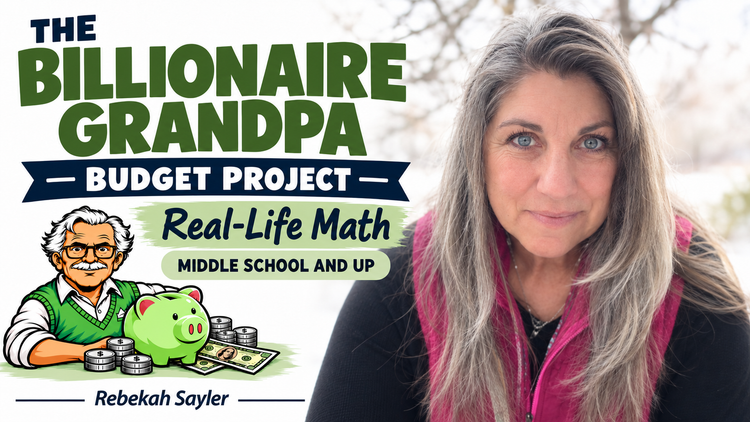
The "Billionaire Grandpa" Budget Project

Story based real-life math.

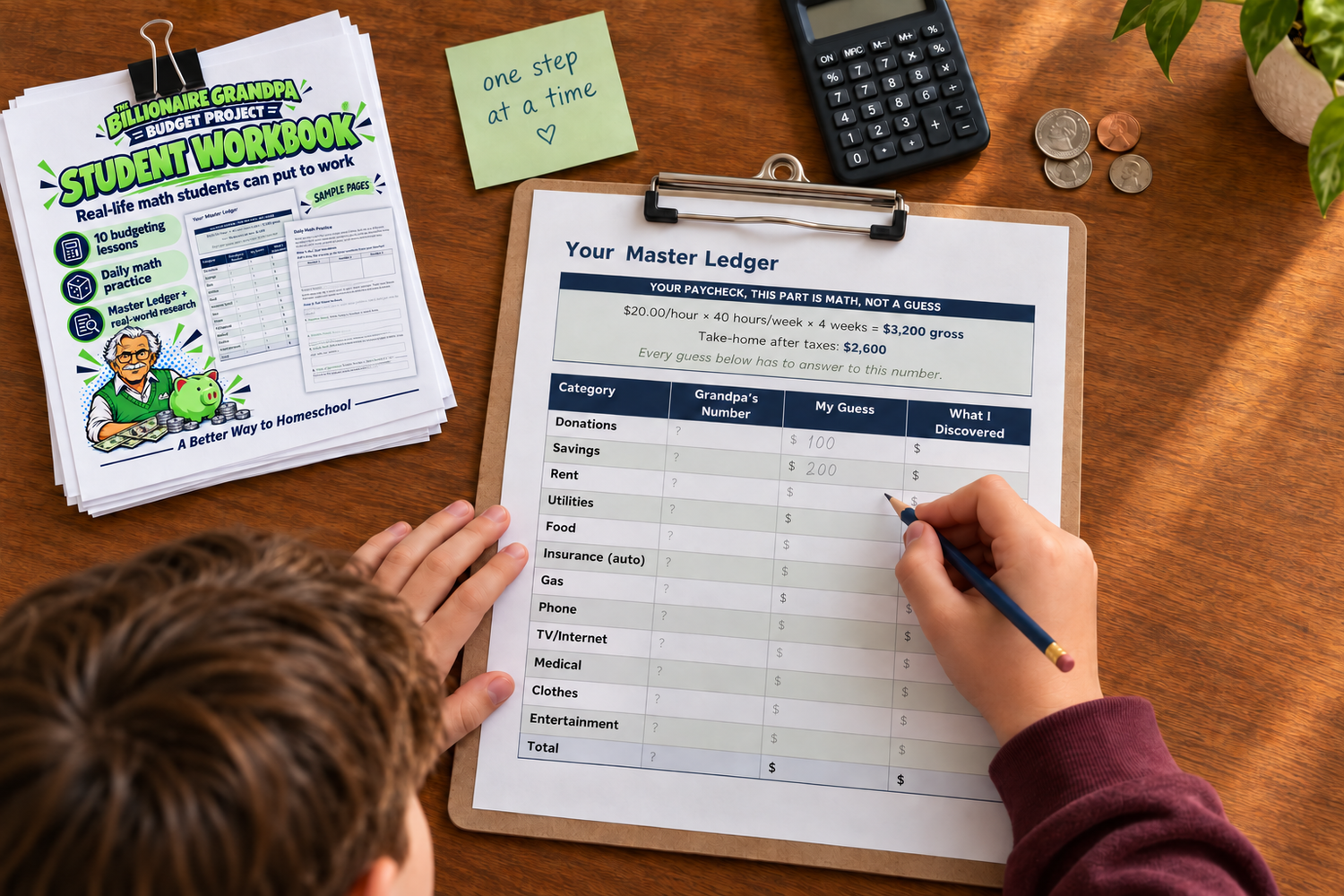
  • They calculate real income.

  • They pay rent.

  • They buy groceries and figure out transportation.

  • They make trade-offs when the numbers don't add up the way they hoped.

Suddenly, this isn't school math.

➡️ It's decision-making under pressure. It's learning how numbers shape real life.

And when a middle schooler sees math do something real, something that matters, everything changes.

  • The resistance drops.

  • The engagement shows up.

  • The confidence follows.

They don't just learn math. They use it!

This is the thread that runs through the whole year. Everything else, the daily basics, the monthly focus, all of it is in service of getting here.

That is the difference between a middle schooler who barely gets through middle school math. and one who actually understands it — and carries that confidence into everything that comes next.

image.png

And Then It Keeps Giving.

Every 7 days, something new unlocks inside the plan.

🎯 The Marble That Changes Everything — a tiny visual savings activity that quietly rewires how your middle schooler thinks about money and goals

💰 The Reality Check They'll Thank You For — a real-life expense activity that sparks the money conversations you've been meaning to have

🪙 Penny Doubled — one of those lessons that starts loud and ends in silence. The best kind.

📋 Math for the Real Days — 49 real-life math starters for the days when nothing feels like working

🎨 The Day Math Felt Like Art — percent practice that doesn't look like practice

🧩 Rubik's Cube Secret Mission — a critical thinking challenge your middle schooler will actually ask to do again


No pressure. No setup. Just open it when it arrives and let it surprise you both.


Not more homework. Not another lesson to prep.

Just a short, smart activity that makes your student think without realizing they're doing math.

What This Gives You as the Homeschool Parent

Okay. This feels right. I know what I'm doing. And I don't have to figure it out alone.

That's the feeling this plan is designed to give you.

No more late-night spiraling about whether you're doing enough.

No more stacking extra programs just in case.

No more math time turning into a standoff.

  • You have a clear year.

  • You know what builds the foundation.

  • You know what can wait.

And instead of math exposing your doubts, it becomes something you lead — calmly, on purpose.

Will They Still Be Ready for High School Math?

Yes. And here's why.

When a student truly understands fractions, decimals, percentages, ratios, and how to reason through a problem, Algebra doesn't feel like a foreign language. It feels familiar.

This isn't delaying progress. It's securing it.

Strong foundations now create stronger Algebra students later.

My own son skipped the early Algebra track. He became a mathematician.

The slower path isn't the wrong path — it's often the only one that actually works.

One time. Instant access. No subscription.

Less than a single tutoring session. More than a year's worth of direction.

This Isn't For You If...

You want your student to work through math a hundred percent on their own, no involvement from you.

You don't want to think about what they're actually learning, just that they're doing something.

You're looking for turn the page, do the lesson, grade it, done.

You're chasing test scores over persistence, critical thinking, and a middle schooler who actually understands what they're doing.

This plan asks you to lead. If that's not what you're looking for right now, that's okay. But if it is, keep going.

Questions You Probably Have

💗 What exactly am I buying?

You're purchasing a plan for you as the teacher, not another student workbook. It has three parts. Short lessons on mindset and approach, so you show up calm and clear. A set of everyday tools for the days you just need a quick answer, like Multiplication Mania and the quick-pick activity tool. And the full Budget Project, the year-long capstone that ties it all together.

💗 Is there an actual framework, or is it just a collection of ideas?

There's a framework. The plan follows a clear 10-month progression, built around the foundations middle schoolers actually need before Algebra. Each month has a focus area so you always know what matters right now and what comes next. It's not a random collection of tips. It's a sequence, with a reason behind the order.

💗 Is this a full curriculum with daily lessons?

It gives you a clear direction for the year and a wide variety of ways your student can practice and apply math. You're not locked into rigid daily assignments. You choose the activities and pace that work for your family — this is a guide, not a script.

💗 What ages is this best for?

This was designed for middle schoolers, typically ages 11 to 14. It works especially well for students who feel overwhelmed by traditional math programs, need stronger foundations before Algebra, or learn better when they can see math connect to real life.

💗 Can I use this alongside my current math curriculum?

Yes. Many families use this plan to guide what matters most while slowing down or supplementing their current curriculum. It works on its own or alongside whatever you're already using.

💗 What if my child really struggles with math?

That's exactly who this plan helps most. Instead of pushing students forward before they're ready, the roadmap focuses on strengthening the math skills that make everything else easier later: fractions, decimals, percentages, ratios, mental math, and logical reasoning. When those foundations are solid, Algebra becomes far less intimidating.

💗 What does a typical week look like?

About 20 to 30 minutes a day focused on strengthening core skills, mental math, and real-life reasoning. Steady work without overload. Intentional without being intense.

$27.

Your calmer math year starts today

image.png
image.png